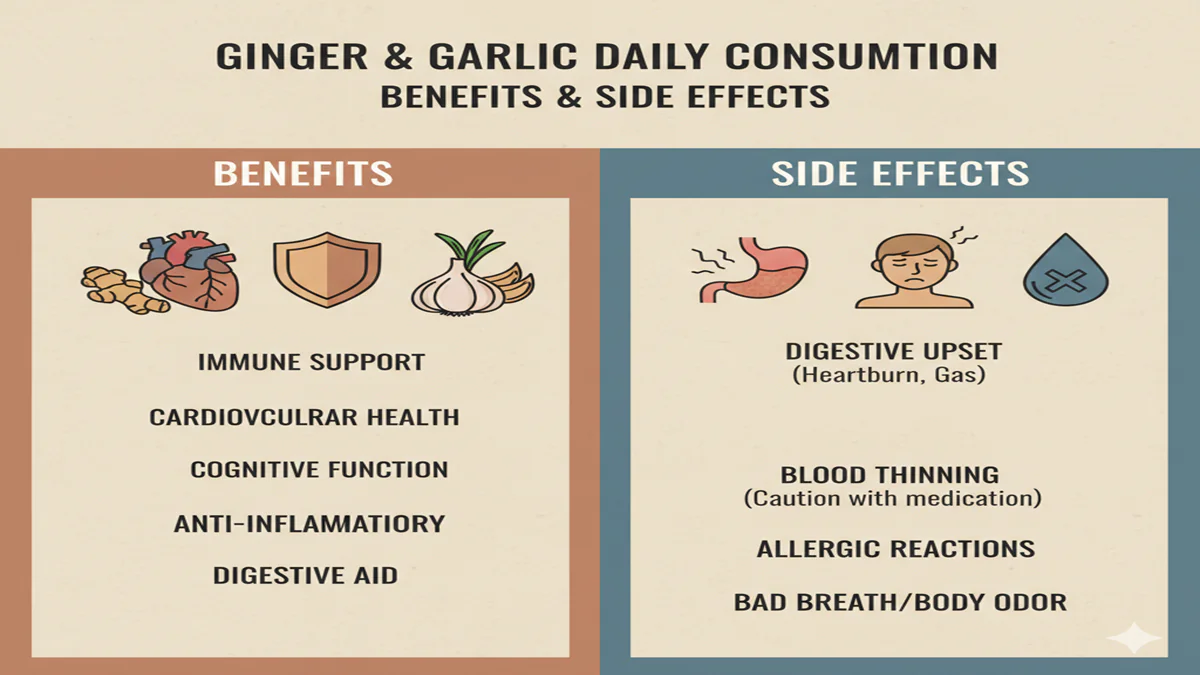
Ginger and Garlic (अदरक और लहसुन): स्वाद ही नहीं, सेहत का भी खजाना! जानें इसके 10 चमत्कारी फायदे और सही उपयोग।
Ginger Garlic Benefits: Introduction: भारतीय रसोई में अगर किसी मसाले का सबसे ज्यादा दबदबा है, तो वह है अदरक और लहसुन (Ginger and Garlic)। इनका इस्तेमाल न केवल ग्रेवी को गाढ़ा और स्वादिष्ट बनाने के लिए किया जाता है, बल्कि आयुर्वेद में इन्हें ‘प्राकृतिक औषधि’ का दर्जा दिया गया है।
अदरक और लहसुन दोनों ही अपने एंटी-इंफ्लेमेटरी, एंटी-बैक्टीरियल और एंटीऑक्सीडेंट गुणों के लिए मशहूर हैं। यदि आप अपनी रोग प्रतिरोधक क्षमता (Immunity) बढ़ाना चाहते हैं या हृदय रोगों से बचना चाहते हैं, तो इनका सही सेवन आपके लिए वरदान साबित हो सकता है। इस लेख में हम Ginger and Garlic Benefits के बारे में विस्तार से चर्चा करेंगे।
- अदरक (Ginger): इसमें ‘जिंजरोल’ (Gingerol) नामक तत्व होता है जो पाचन और सूजन में मदद करता है।
- लहसुन (Garlic): इसमें ‘एलिसिन’ (Allicin) नामक यौगिक होता है, जो इसे सल्फर जैसी गंध और अद्भुत औषधीय गुण देता है।
2. अदरक और लहसुन के मुख्य फायदे (Key Benefits)
Ginger Garlic Benefits: १. हृदय स्वास्थ्य के लिए (Promotes Heart Health): लहसुन और अदरक दोनों ही रक्त संचार को बेहतर बनाने में मदद करते हैं। लहसुन खराब कोलेस्ट्रॉल (LDL) को कम करता है और अदरक धमनियों में थक्के जमने से रोकता है। यह संयोजन हाई ब्लड प्रेशर को नियंत्रित करने के लिए सबसे प्रभावी माना जाता है।
Ginger Garlic Benefits: २. रोग प्रतिरोधक क्षमता में वृद्धि (Immunity Booster): आजकल के बदलते मौसम में संक्रमण से बचने के लिए अदरक और लहसुन का सेवन बहुत जरूरी है। यह शरीर की श्वेत रक्त कोशिकाओं (WBC) को सक्रिय करता है, जिससे सर्दी, जुकाम और फ्लू जैसी बीमारियाँ पास नहीं आतीं।
३. पाचन तंत्र को बनाए मजबूत (Improves Digestion): अदरक पेट की गैस और अपच को दूर करने के लिए जाना जाता है, जबकि लहसुन आंतों के हानिकारक बैक्टीरिया को खत्म करता है। यदि आपको खाना न पचने की समस्या है, तो अदरक-लहसुन का पेस्ट या काढ़ा आपके लिए बहुत फायदेमंद है।
Ginger Garlic Benefits: ४. जोड़ों के दर्द और सूजन में राहत (Relief from Joint Pain): गठिया (Arthritis) या मांसपेशियों के दर्द से परेशान लोगों के लिए यह जोड़ी किसी चमत्कार से कम नहीं है। इसमें मौजूद एंटी-इंफ्लेमेटरी गुण जोड़ों की सूजन को कम करते हैं और दर्द में प्राकृतिक आराम देते हैं।
५. कैंसर से बचाव (Cancer Prevention): अनेक शोध बताते हैं कि लहसुन और अदरक में मौजूद एंटीऑक्सीडेंट गुण कैंसर की कोशिकाओं को बढ़ने से रोकने में सहायक हो सकते हैं, विशेषकर पेट और कोलन कैंसर के जोखिम को कम करने में।
3. सेवन करने का सही तरीका (How to Consume)
- खाली पेट सेवन: सुबह खाली पेट कच्चा लहसुन और अदरक का एक छोटा टुकड़ा गुनगुने पानी के साथ लेने से मेटाबॉलिज्म तेज होता है और वजन घटाने में मदद मिलती है।
- अदरक-लहसुन की चाय: पानी में कद्दूकस किया हुआ अदरक और लहसुन उबालें, फिर उसमें शहद और नींबू मिलाकर पिएं। यह ‘डिटॉक्स ड्रिंक’ के रूप में काम करता है।
- खाना पकाते समय: मसालों के साथ अदरक-लहसुन का ताजा पेस्ट इस्तेमाल करें। कोशिश करें कि इन्हें बहुत ज्यादा न भूनें ताकि इनके पोषक तत्व बने रहें।
4. सावधानियां और नुकसान (Precautions & Side Effects)
Ginger Garlic Benefits: अदरक और लहसुन फायदेमंद हैं, लेकिन इनका अति सेवन नुकसानदेह भी हो सकता है:
- गर्भावस्था: गर्भवती महिलाओं को अधिक मात्रा में अदरक का सेवन नहीं करना चाहिए क्योंकि इसकी तासीर गर्म होती है।
- खून पतला होना: जो लोग खून पतला करने वाली दवाएं (Blood thinners) ले रहे हैं, उन्हें डॉक्टर की सलाह पर ही इनका सेवन करना चाहिए।
- सीने में जलन: लहसुन के अधिक सेवन से कुछ लोगों को एसिडिटी या सीने में जलन की समस्या हो सकती है।
4. अक्सर पूछे जाने वाले प्रश्न (FAQs)
Q1: क्या रोजाना कच्चा लहसुन खाना सुरक्षित है?
Ans: हाँ, रोजाना लहसुन की 1-2 कलियां खाना सुरक्षित और हृदय के लिए बहुत अच्छा है।
Q2: क्या अदरक और लहसुन से वजन कम होता है?
Ans: हाँ, यह शरीर की गर्मी (Thermogenesis) बढ़ाता है और मेटाबॉलिज्म को तेज करता है, जिससे फैट बर्न करने में मदद मिलती है।
Q3: क्या मैं लहसुन और अदरक को शहद के साथ खा सकता हूँ?
Ans: बिल्कुल! लहसुन, अदरक और शहद का मिश्रण गले के संक्रमण और इम्यूनिटी के लिए एक शक्तिशाली औषधि है।
Conclusion: प्रकृति का अनमोल उपहार!
Ginger Garlic Benefits: अदरक और लहसुन (Ginger and Garlic) रसोई के सिर्फ दो मसाले नहीं हैं, बल्कि यह एक संपूर्ण घरेलू उपचार केंद्र हैं। इनका संतुलित उपयोग आपको कई बड़ी बीमारियों से बचा सकता है। अपनी दिनचर्या में इन्हें शामिल करें और एक स्वस्थ जीवन की शुरुआत करें।
The Daily Duo: Unpacking the Science, Benefits, and Cautions of Regular Ginger & Garlic Consumption
Ginger Garlic Benefits: For millennia, ginger and garlic have been more than just culinary staples. Woven into the fabric of traditional medicine systems from Ayurveda to Traditional Chinese Medicine, these potent rhizomes and bulbs have been revered as healing powerhouses.
Today, as modern science delves deeper into their biochemical complexities, the age-old wisdom is being validated in laboratories and clinical studies worldwide. Incorporating ginger and garlic into your daily diet has moved from folk remedy to a strategy backed by a growing body of nutritional science. But with such potent compounds comes the need for understanding—what are the real benefits, and when does daily consumption tip into the realm of side effects? This comprehensive guide explores the multifaceted impact of making ginger and garlic a daily ritual.
Part 1: Ginger – The Fiery Rhizome of Wellness
Ginger Garlic Benefits: The Biochemical Powerhouse: Gingerols and Shogaols
Ginger’s primary bioactive compound, gingerol, is responsible for its distinctive pungency and much of its medicinal prowess. When ginger is dried or cooked, gingerols transform into shogaols, which are even more potent antioxidants. These compounds are the engines behind ginger’s wide-ranging effects.
Documented Benefits of Daily Ginger Consumption:
- Master of Nausea and Digestive Soothing: This is perhaps ginger’s most celebrated benefit. Studies consistently show ginger’s efficacy in alleviating nausea from multiple sources:
- Pregnancy: A meta-analysis in the American Journal of Obstetrics & Gynecology found ginger significantly more effective than a placebo in reducing pregnancy-related nausea and vomiting, with no increased risk of adverse outcomes at common doses (up to 1 gram daily).
- Chemotherapy-Induced: It can help manage nausea for patients undergoing treatment.
- Post-Surgery: Shown to be as effective as some medications.
- General Digestion: Ginger stimulates saliva, bile, and gastric enzymes, promoting efficient digestion and reducing bloating and dyspepsia.
- A Potent Anti-Inflammatory and Pain Reliever: Chronic, low-grade inflammation is a root cause of many modern diseases. Gingerols inhibit the production of pro-inflammatory cytokines and prostaglandins. This makes daily ginger consumption particularly beneficial for:
- Osteoarthritis: Multiple studies, including one in Osteoarthritis and Cartilage, found patients taking ginger extract reported significant reductions in knee pain on standing and walking.
- Exercise-Induced Muscle Soreness: Ginger can accelerate recovery and reduce day-after pain.
- General Aches: Its analgesic properties can provide mild relief for headaches and menstrual pain (dysmenorrhea).
- Ginger Garlic Benefits: Cardiovascular Guardian:Daily ginger intake supports heart health through several pathways:
- Blood Pressure: It may act as a natural calcium channel blocker and vasodilator, helping to relax blood vessels.
- Cholesterol: Studies suggest it can lower LDL (“bad”) cholesterol and triglyceride levels.
- Blood Clotting: Its antiplatelet aggregation properties can reduce the risk of clot formation, though this requires caution (see side effects).
- Ginger Garlic Benefits: Immune System Modulation and Antimicrobial Action:Ginger is not just an antioxidant; it’s also a warming diaphoretic (promotes sweating) and has direct antimicrobial properties. Daily consumption, especially as tea during cold season, can help fend off pathogens and support the body’s innate immune response.
- Blood Sugar Regulation: Emerging research, including a 2015 study in the Journal of Ethnic Foods, indicates that ginger can improve insulin sensitivity, reduce fasting blood sugar, and lower HbA1c in individuals with type 2 diabetes, making it a valuable dietary adjunct.
Part 2: Garlic – The Aromatic Bulb of Vitality
Ginger Garlic Benefits: The Key to the Magic: Allicin and Sulfur Compounds
Garlic’s power lies dormant until it is crushed, chopped, or chewed. The enzyme alliinase then converts the compound alliin into allicin—the source of garlic’s iconic smell and its primary therapeutic agent. Allicin quickly breaks down into other beneficial sulfur-containing compounds like diallyl disulfide and ajoene.
Documented Benefits of Daily Garlic Consumption:
- Ginger Garlic Benefits: Cardiovascular Powerhouse (The Cholesterol and Blood Pressure Regulator):Garlic’s most robust scientific support lies in cardiovascular protection.
- Hypertension: A meta-analysis in BMC Cardiovascular Disorders concluded that garlic supplements are as effective as common blood pressure medications for individuals with hypertension, with an average reduction of 7-9 mmHg in systolic pressure.
- Cholesterol and Triglycerides: It consistently shows a modest but significant reduction (about 10-15%) in total and LDL cholesterol levels.
- Anti-Atherosclerotic: It may slow the progression of arterial plaque formation and has potent antioxidant properties that protect LDL cholesterol from oxidation—a key step in heart disease.
- recovered 70% faster than the placebo group. Garlic enhances the disease-fighting response of white blood cells when encountering viruses.
- Natural Detoxification Support: The sulfur compounds in garlic aid Phase II detoxification in the liver. They also facilitate the synthesis of glutathione, the body’s master antioxidant, and have been shown to help protect organs from heavy metal toxicity (like lead) by increasing their excretion.
- Ginger Garlic Benefits: Antimicrobial and Antifungal Agent:Garlic has been called “Russian penicillin” for a reason. Its broad-spectrum activity against bacteria, viruses, fungi, and parasites makes it a time-honored remedy for infections. Allicin interferes with crucial enzyme systems in pathogens.
- Cancer Risk Reduction – The Promising Evidence: Population studies consistently link higher garlic consumption with a reduced risk of certain cancers, particularly those of the digestive tract (stomach, colon). The International Agency for Research on Cancer (IARC) includes garlic in its list of foods with possible cancer-preventive properties. Its mechanisms include blocking carcinogen formation, enhancing DNA repair, and inducing apoptosis (programmed death) in cancer cells.
Part 3: The Synergistic Effect: Ginger and Garlic Together
Ginger Garlic Benefits: Consuming ginger and garlic together isn’t just a flavor win; it’s a health synergy. Their combined anti-inflammatory and antioxidant effects are greater than the sum of their parts. They work in concert to:
- Provide a broader spectrum of antimicrobial defense.
- Offer more comprehensive cardiovascular support (ginger for clotting and blood flow, garlic for cholesterol and pressure).
- Create a powerful digestive aid combo—ginger soothes and stimulates, while garlic supports gut flora balance and fights pathogens.
Practical Ways to Consume Them Daily:
- Ginger Garlic Benefits: Culinary Foundation:Start soups, stews, curries, and stir-fries with a base of minced garlic and grated ginger.
- The Wellness Shot: A small shot of blended raw ginger, garlic, lemon, and a touch of honey (for balance).
- Infused Oils & Vinegars: Create flavorful, health-boosting condiments.
- Tea: Steep slices of fresh ginger and a crushed garlic clove in hot water with lemon and honey. (The garlic flavor mellows significantly).
- Supplements: For those who cannot tolerate the taste or for targeted therapeutic doses, high-quality supplements (like enteric-coated garlic pills to avoid odor, standardized ginger extracts) are an option. Always consult a healthcare provider before starting supplements.
Part 4: The Crucial Caveats – Side Effects and Contraindications
Ginger Garlic Benefits: While generally safe as food, daily consumption in medicinal amounts can pose risks for some.
Ginger Side Effects & Who Should Be Cautious:
- Digestive Discomfort: In high doses (>5g/day), it can cause heartburn, gas, or mouth irritation.
- Blood Thinning: Its antiplatelet effect can increase bleeding risk. Those on anticoagulants (warfarin, aspirin, clopidogrel) or facing surgery should use caution and consult a doctor.
- Gallstones: May increase bile production, potentially problematic for those with gallbladder disease.
- Pregnancy: While effective for nausea, doses above 1 gram per day should be medically supervised.
Garlic Side Effects & Who Should Be Cautious:
- Ginger Garlic Benefits: Digestive Issues:Raw garlic, especially on an empty stomach, can cause heartburn, gas, nausea, and diarrhea in some.
- Bleeding Risk: A more potent blood thinner than ginger. A critical contraindication for those on anticoagulants or before surgical procedures.
- Odor: The obvious social side effect—garlic breath and body odor.
- Drug Interactions: Can interfere with the efficacy of some HIV and transplant (immunosuppressant) medications.
- Ginger Garlic Benefits: Autoimmune & Low Blood Pressure:May overstimulate the immune system in autoimmune conditions and can potentially lower blood pressure too much in those already on medication.
The Golden Rule: Moderation is key. A daily dose of 1-3 grams of fresh ginger (approx. ½ to 1 teaspoon grated) and 1-2 cloves of garlic is generally considered safe and beneficial for most adults.
Conclusion
Ginger Garlic Benefits: Ginger and garlic are exemplary bridges between the kitchen and the medicine cabinet. Their daily consumption, rooted in ancient tradition, is now a practice illuminated by modern scientific validation. From taming inflammation and guarding the heart to bolstering immunity and aiding digestion, this dynamic duo offers a formidable, natural defense against many ailments of modern life.
Ginger Garlic Benefits: However, their potency demands respect. They are food, but they are also medicine. By embracing them with mindful moderation, an awareness of personal health conditions, and a commitment to consult healthcare professionals when in doubt, you can safely harness their remarkable power. Making ginger and garlic a daily ritual is a simple, flavorful, and profoundly wise investment in long-term vitality.
Frequently Asked Questions (FAQ)
1. Can I take ginger and garlic together every day on an empty stomach?
Ginger Garlic Benefits: While some advocate for this to maximize absorption, raw garlic and ginger on an empty stomach can be harsh, causing irritation, heartburn, or nausea for many people. It is generally better tolerated when consumed with or as part of a meal. If you wish to try it on an empty stomach, start with a very small amount (a sliver of ginger, half a small garlic clove) in a large glass of warm water and monitor your body’s response.
2. Do cooking ginger and garlic destroy their health benefits?
Ginger Garlic Benefits: Cooking does alter the beneficial compounds but doesn’t eliminate benefits entirely. Heat deactivates the enzyme that creates garlic’s allicin. To maximize garlic’s benefits, crush or chop it and let it sit for 10 minutes before cooking to allow allicin to form. For ginger, cooking converts gingerols to shogaols, which are still beneficial and potent. A mix of both raw (in dressings, shots) and cooked consumption is ideal for a full spectrum of compounds.
3. What is a safe and effective daily dose for general health?
Ginger Garlic Benefits: Forginger, 1-3 grams (about ½ to 1 teaspoon of freshly grated ginger) per day is a common therapeutic range. Forgarlic, 1-2 fresh cloves (approximately 4 grams) daily is considered effective and safe for most. Always start at the lower end to assess tolerance.
4. I’m on blood pressure medication. Can I still consume garlic daily?
Ginger Garlic Benefits: Garlic has a proven blood pressure-lowering effect. If you are on medication, daily consumption of medicinal amounts (like supplements or large quantities of raw garlic) could potentially cause your blood pressure to drop too low (hypotension). It iscrucial to consult your doctor. They may need to monitor your levels and adjust your medication. Culinary amounts used in cooking are typically less concerning but should still be discussed.
5. Are ginger and garlic supplements as good as the fresh forms?
Ginger Garlic Benefits: Supplements (like aged garlic extract or standardized ginger capsules) offer consistent, odor-controlled dosing and are backed by significant research for specific conditions (e.g., cardiovascular support). They are excellent for therapeutic use. However, fresh forms provide a wider array of complementary phytonutrients and fibers. For general daily health, incorporating the fresh forms into food is ideal. Supplements are best used for targeted benefits under guidance, especially if you have health conditions or take other medications.