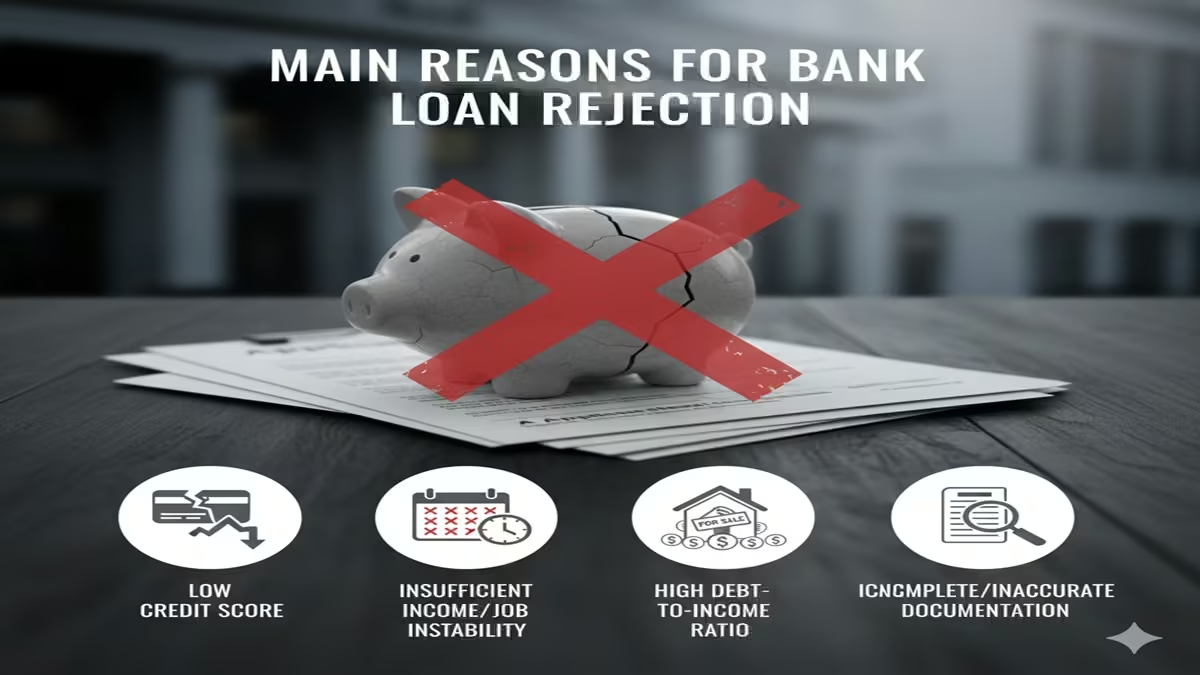
Bank Loan Reject Hone Ke Main Reasons: आपका लोन बार-बार रिजेक्ट क्यों हो रहा है? जानें ये 7 बड़ी गलतियां!
Bank Loan Reject Hone Ke Main Reasons: Introduction: आज के दौर में घर खरीदना हो, बच्चों की पढ़ाई हो या बिजनेस का विस्तार, हमें अक्सर बैंक लोन की जरूरत पड़ती है। हम पूरी उम्मीद के साथ बैंक में आवेदन (Apply) करते हैं, लेकिन कई बार बैंक हमारे आवेदन को ‘Reject’ कर देता है। लोन रिजेक्ट होने से न केवल हमारी योजनाएं रुक जाती हैं, बल्कि इसका बुरा असर हमारे CIBIL Score पर भी पड़ता है।
यदि आप भी जानना चाहते हैं कि “Bank Loan Reject Hone Ke Main Reasons” क्या हैं, तो यह लेख आपके लिए बहुत महत्वपूर्ण है। अक्सर छोटी-छोटी गलतियों के कारण बैंक बड़े-बड़े लोन आवेदन ठुकरा देता है। आइए विस्तार से समझते हैं कि वे कौन से कारण हैं जिनकी वजह से बैंक आपको पैसा देने से कतराते हैं।
1. खराब सिबिल स्कोर (Low CIBIL Score)
Bank Loan Reject Hone Ke Main Reasons: लोन रिजेक्ट होने का सबसे पहला और बड़ा कारण है आपका सिबिल स्कोर। बैंक के लिए यह आपकी ‘वित्तीय साख’ (Financial Credibility) का पैमाना है।
- वजह: यदि आपका स्कोर 700-750 से कम है, तो बैंक आपको ‘जोखिम भरा’ ग्राहक मानता है।
- समाधान: अपने पुराने बिल और ईएमआई समय पर भरें और अपना स्कोर सुधारें।
2. कम आय और कर्ज का अधिक बोझ (High DTI Ratio)
Bank Loan Reject Hone Ke Main Reasons: बैंक यह देखता है कि आपकी कमाई कितनी है और आप पर पहले से कितना कर्ज है। इसे ‘Debt-to-Income Ratio’ कहा जाता है।
- वजह: यदि आपकी सैलरी का 50% से अधिक हिस्सा पहले से चल रही ईएमआई में जा रहा है, तो बैंक नया लोन देने से मना कर देगा।
- समाधान: नया लोन लेने से पहले अपने छोटे-मोटे पुराने कर्ज चुका दें।
3. नौकरी या बिजनेस में अस्थिरता (Job Instability)
Bank Loan Reject Hone Ke Main Reasons: बैंक ऐसे व्यक्ति को लोन देना पसंद करते हैं जिसकी आय का स्रोत स्थायी हो।
- वजह: यदि आप हर 6 महीने में नौकरी बदलते हैं या आपका बिजनेस नया है (2 साल से कम), तो बैंक को आपके भुगतान करने की क्षमता पर संदेह होता है।
- समाधान: कम से कम एक कंपनी में 1-2 साल तक काम करने के बाद ही बड़े लोन के लिए आवेदन करें।
4. अधूरा या गलत दस्तावेज (Documentation Errors)
कई बार सब कुछ सही होने के बावजूद केवल कागजी कार्रवाई की कमी से लोन रिजेक्ट हो जाता है।
- वजह: पैन कार्ड, आधार कार्ड, इनकम टैक्स रिटर्न (ITR) या बैंक स्टेटमेंट में जानकारी का मेल न खाना।
- समाधान: आवेदन करने से पहले सभी दस्तावेजों को दोबारा चेक करें और सुनिश्चित करें कि नाम और पता हर जगह एक जैसा हो।
5. डिफॉल्टर लिस्ट में होना या गारंटर बनना
- वजह: यदि आपने अतीत में किसी लोन का भुगतान नहीं किया है या आप किसी ऐसे व्यक्ति के ‘गारंटर’ बने थे जिसने लोन नहीं चुकाया, तो आपका नाम बैंक की ‘Negative List’ में आ जाता है।
- समाधान: किसी का गारंटर बनने से पहले सोच-समझकर फैसला लें।
6. निवास और कार्यस्थल का वेरिफिकेशन फेल होना
Bank Loan Reject Hone Ke Main Reasons: बैंक आपके घर और दफ्तर पर भौतिक रूप से वेरिफिकेशन (Physical Verification) के लिए अधिकारी भेजता है।
- वजह: यदि वेरिफिकेशन के समय आप वहां नहीं मिलते या पड़ोसी आपके बारे में गलत जानकारी देते हैं, तो लोन तुरंत रिजेक्ट हो जाता है।
7. आयु सीमा (Age Limit Criteria)
- वजह: यदि आप रिटायरमेंट के करीब हैं या आपकी उम्र 21 साल से कम है, तो बैंक लंबी अवधि का लोन (जैसे होम लोन) देने में संकोच करते हैं।
4. अक्सर पूछे जाने वाले प्रश्न (FAQs)
Q1: क्या लोन रिजेक्ट होने के बाद दोबारा अप्लाई कर सकते हैं?
Ans: हाँ, लेकिन तुरंत अप्लाई न करें। पहले रिजेक्शन का कारण जानें, उसे सुधारें और कम से कम 3 से 6 महीने बाद दोबारा आवेदन करें।
Q2: क्या बार-बार लोन रिजेक्ट होने से सिबिल स्कोर गिरता है?
Ans: जी हाँ! हर बार जब आप लोन के लिए अप्लाई करते हैं, बैंक आपका सिबिल चेक करता है (Hard Inquiry)। बार-बार रिजेक्शन से आपके स्कोर में गिरावट आती है।
Q3: मेरा सिबिल 800 है फिर भी लोन रिजेक्ट क्यों हुआ?
Ans: सिबिल अच्छा होने के बावजूद आपकी ‘Inadequate Income’ (कम आय) या बैंक की ‘Internal Policy’ के कारण लोन रिजेक्ट हो सकता है।
Conclusion: रिजेक्शन से बचने के स्मार्ट तरीके
Bank Loan Reject Hone Ke Main Reasons को समझने के बाद अब आप बेहतर तैयारी कर सकते हैं। लोन के लिए आवेदन करने से पहले अपना सिबिल स्कोर चेक करें, दस्तावेजों को दुरुस्त रखें और अपनी आय के अनुसार ही लोन राशि का चुनाव करें। याद रखें, एक अच्छी तैयारी ही आपके लोन पास होने की गारंटी है।
Top 5 Reasons for Bank Loan Rejection & How to Improve Your Approval Chances
Introduction: The Financial Crossroad
Bank Loan Reject Hone Ke Main Reasons The moment arrives when you submit your bank loan application with hopeful anticipation—whether for your dream home, a new business venture, education abroad, or a vehicle. Days or weeks later, a formal rejection letter arrives, delivering both financial and emotional disappointment. In India, loan rejection rates hover between 20-30% across various banking sectors, with personal loans experiencing some of the highest rejection rates. Understanding why banks say “no” isn’t just about processing the rejection; it’s about strategically positioning yourself for future financial success.
Bank Loan Reject Hone Ke Main Reasons: This comprehensive guide explores the five primary reasons behind loan rejections, supplemented with real-world case studies, preventative strategies, and recovery pathways. Whether you’re a first-time applicant or someone rebuilding from previous rejection, this knowledge transforms you from a passive applicant to an informed financial strategist.
Reason 1: The Credit Score Conundrum
The 3-Digit Number That Speaks Volumes
Bank Loan Reject Hone Ke Main Reasons: Your Credit Information Report (CIR) and accompanying Credit Score (typically from CIBIL, Experian, Equifax, or CRIF High Mark) represent your financial reputation distilled into a numeric value between 300-900. In the lender’s eyes, this score predicts your future repayment behavior based on your historical financial conduct.
Why It Matters So Much
Bank Loan Reject Hone Ke Main Reasons: Banks rely on credit scores as an objective, standardized risk assessment tool. According to TransUnion CIBIL data, nearly 79% of loans are approved for consumers with scores above 750, while approval rates drop dramatically below 700. The score reflects:
- Payment history (35% weightage): Timely payments boost scores; delays damage them
- Credit utilization (30%): Ratio of used credit to available limits
- Credit history length (15%): Longer positive history improves scores
- Credit mix (10%): Healthy combination of secured and unsecured credit
- New credit inquiries (10%): Multiple applications signal financial distress
The Hidden Pitfalls Beyond the Number
Case Study: The “Thin File” Problem
Bank Loan Reject Hone Ke Main Reasons: Rohit, 24, a software engineer with a respectable salary, was shocked when his car loan application was rejected despite no debt history. The problem? A “thin file”—insufficient credit history for assessment. Without data points, banks cannot evaluate risk, making them cautious.
The “Maxed-Out” Professional
Bank Loan Reject Hone Ke Main Reasons: Priya, 32, maintained a 780 credit score until she utilized 95% of her credit card limits during home renovations. Despite her high income, her credit utilization spike lowered her score to 690, resulting in home loan rejection six months later.
Rehabilitation Roadmap
- Obtain your credit report annually from all four bureaus (free once yearly)
- Dispute inaccuracies immediately—errors affect 5-8% of reports
- Maintain utilization below 30% of available limits
- Never close old accounts—they establish history length
- Set payment reminders to avoid accidental delays
- Consider secured credit cards if rebuilding from poor history
Proactive Strategy: Credit Score Monitoring
Bank Loan Reject Hone Ke Main Reasons: Implement quarterly credit check-ups using free monitoring services. Address issues proactively rather than discovering problems during loan applications. For those with limited history, consider small installment loans (like mobile phone EMI) to establish positive payment patterns.
Reason 2: Income Instability and Employment Concerns
The Affordability Equation
Bank Loan Reject Hone Ke Main Reasons: Banks employ sophisticated Debt-to-Income (DTI) ratio calculations to determine repayment capacity. The standard threshold is 40-50%—meaning your total monthly debt obligations (proposed new loan plus existing liabilities) shouldn’t exceed half your monthly income.
The Changing Nature of Employment Assessment
Traditional Employment Red Flags:
- Recent job changes (less than 6-12 months in current role)
- Industry volatility or declining sectors
- Irregular income patterns (significant commission fluctuations)
- Probationary employment status
The Gig Economy Challenge:
Bank Loan Reject Hone Ke Main Reasons: For freelancers, consultants, and gig workers, the assessment changes dramatically. Banks scrutinize:
- Income consistency over 2-3 years
- Client concentration risk (over-reliance on few clients)
- Business sustainability indicators
- Tax filing history and professionalism of financial documentation
Sector-Specific Vulnerabilities
Case Study: The Pandemic Revelation
Bank Loan Reject Hone Ke Main Reasons: A travel agency owner with 15 years of profitable operation saw his business loan rejected post-COVID despite historical success. Banks now evaluate industry vulnerability to external shocks, making hospitality, travel, and retail businesses higher risk regardless of individual performance.
Documentation Discrepancies
Bank Loan Reject Hone Ke Main Reasons: The devil resides in details often overlooked:
- Mismatched addresses across documents
- Variations in name spelling (e.g., “Ajay Kumar” vs “A. Kumar”)
- Unsubstantiated income claims without supporting bank statements
- Inconsistent employment verification
Strengthening Your Employment Profile
- Maintain employment stability where possible, or document logical career progression
- Prepare comprehensive income proof including bank statements, tax returns, Form 16, and appointment letters
- For self-employed, maintain professionally audited financials for 2-3 years
- Bridge income gaps with explanations and supplementary documentation
- Consider reducing existing debt before applying for new credit
- Include all income sources—rental, investments, side businesses with proper documentation
The Co-applicant Strategy
Bank Loan Reject Hone Ke Main Reasons: Adding a financially stable co-applicant (typically spouse or parents) can significantly improve approval chances by combining income and reducing individual DTI ratios. This approach increased approval rates by approximately 35% for marginal cases in a 2022 banking study.
Reason 3: Existing Debt Burden and Financial Obligations
The Overleveraged Borrower
Bank Loan Reject Hone Ke Main Reasons: Banks evaluate not just whether you can afford payments today, but whether you can sustain them through potential financial setbacks. The Total Obligation Ratio (TOR) includes:
- Proposed new loan EMI
- Existing loan EMIs (home, car, personal, education)
- Credit card minimum payments (typically calculated as 5% of outstanding balance)
- Other fixed financial commitments (rent, child support, insurance premiums)
The Silent Debt Indicators
Bank Loan Reject Hone Ke Main Reasons: Credit Card Minimums:Many applicants underestimate how banks calculate credit card debt. Even if you pay minimum amounts, banks assume 3-5% of your total credit limit as monthly obligation.
Bank Loan Reject Hone Ke Main Reasons: Co-signed Liabilities:Loans where you’re a guarantor or co-signer appear on your credit report and count toward your debt burden, a fact many applicants overlook.
Case Study: The Education Loan Oversight
Bank Loan Reject Hone Ke Main Reasons: An IT professional earning ₹15 lakh annually was rejected for a home loan despite strong credentials. The hidden culprit? A ₹25 lakh education loan for his sibling where he was primary guarantor—adding ₹28,000 to his monthly obligations that he’d mentally excluded.
The Debt Spiral Warning Signs
- Utilizing one credit line to pay another
- Minimum payments only on credit cards
- Loan restructuring requests
- Applying for multiple credit products simultaneously
- Increasing reliance on unsecured debt
Strategic Debt Management Before Application
- Conduct a complete debt audit—list every obligation with terms and balances
- Prioritize high-interest debt reduction, particularly credit cards
- Consider debt consolidation if managing multiple high-interest loans
- Maintain at least 6 months of clean repayment history before new applications
- Avoid new debt commitments 6-12 months before major loan applications
- Request credit limit increases (not to spend more, but to lower utilization ratios)
The 6-Month Preparation Window
Bank Loan Reject Hone Ke Main Reasons: The most successful loan applicants begin preparing at least six months before application:
- Month 1-2: Obtain credit reports, identify issues
- Month 3-4: Reduce utilization, correct errors, pay down balances
- Month 5-6: Stabilize finances, gather documents, research lenders
Reason 4: Inadequate or Problematic Documentation
The Paperwork Paradox
Bank Loan Reject Hone Ke Main Reasons: In an increasingly digital world, documentation remains the cornerstone of loan underwriting. Approximately 15-20% of rejections stem from documentation issues rather than financial incapacity.
Common Documentation Pitfalls
Income Proof Problems:
- Recent salary account changes without continuity
- Large, unexplained deposits (potential “salary dressing”)
- Income significantly higher than industry/role norms
- Frequent cash withdrawals of salary indicating potential undisclosed obligations
Property Documentation Issues (for secured loans):
- Title defects or unclear ownership history
- Legal disputes (even if not directly involving the property)
- Regulatory violations (building code, zoning)
- Valuation discrepancies between buyer and bank assessment
Identity and Address Verification Failures:
- Mismatch between KYC documents and application information
- Recent address changes without proper documentation
- Non-standard documents not accepted by specific banks
The Self-Employed Documentation Challenge
Bank Loan Reject Hone Ke Main Reasons: Self-employed applicants face additional hurdles:
- Business vintage requirements (typically 3+ years)
- Profitability trends versus industry benchmarks
- GST registration and filing consistency
- Business bank account transactions correlating with declared income
Case Study: The Property Title Surprise
Bank Loan Reject Hone Ke Main Reasons: A family purchasing their first home saved for a decade, secured loan approval, then faced last-minute rejection. The cause? The 40-year-old property had a disputed inheritance clause in the original will—discovered during bank legal verification. The lesson: conduct independent due diligence before commitment.
Documentation Excellence Framework
- Create a master document checklist specific to your loan type and lender
- Verify all documents 2-3 months before application for correction time
- Maintain consistency across all identification documents
- Organize chronologically with clear labels and indexes
- Include explanatory notes for any anomalies (large deposits, employment gaps)
- Digital and physical copies prepared in required formats
The Pre-Approval Advantage
Bank Loan Reject Hone Ke Main Reasons: Consider seeking pre-approval (which involves documentation review without property identification) to identify documentation gaps before property hunting. This positions you as a serious buyer and clarifies your actual budget.
Reason 5: Bank-Specific Policies and Uncontrollable Factors
The Institutional Lens
Bank Loan Reject Hone Ke Main Reasons: Each financial institution operates with unique risk appetites, portfolio balances, and strategic priorities that influence approval decisions beyond individual merit.
Policy-Based Rejections
Bank Loan Reject Hone Ke Main Reasons: Industry Exposure Limits:Banks limit exposure to certain sectors. If they’ve recently approved multiple loans to your industry, you might be rejected despite qualifications.
Geographic Restrictions: Some banks minimize exposure to specific regions due to economic conditions, political instability, or natural disaster risks.
Customer Segment Focus: Institutions may prioritize certain demographics (first-time buyers, women entrepreneurs, specific income brackets) during particular periods.
Internal Quotas: Monthly or quarterly approval limits can cause rejections for qualified applicants at period ends.
The Human Element in Decision Making
Bank Loan Reject Hone Ke Main Reasons: Case Study: The Subjective Assessment
Two nearly identical applications to the same bank one month apart received different decisions. The first was approved during a period of aggressive growth targets; the second was rejected during a risk-aversion phase following unexpected defaults in similar profiles.
External Economic Factors
- RBI policy changes altering lending guidelines
- Macroeconomic indicators prompting sector-specific caution
- Regulatory changes impacting documentation or eligibility
- Bank-specific events like merger integration or leadership changes
Mitigation Strategies for External Factors
- Research lender specialization—match your profile with their focus areas
- Apply strategically—beginning of quarters often has fresh approval budgets
- Diversify applications across bank types (public, private, NBFCs)
- Monitor economic news for lending climate indicators
- Build relationships with relationship managers who can provide context
- Consider smaller institutions with more flexible policies
The Multi-Lender Approach (With Caution)
Bank Loan Reject Hone Ke Main Reasons: Applying to 2-3 lenders simultaneously (not sequentially) can increase chances, but must be managed carefully:
- Space applications within 14-30 days to minimize credit score impact
- Ensure consistency in information across applications
- Be transparent if asked about other applications
The Recovery Path: From Rejection to Approval
The 360-Degree Turnaround Strategy
- Bank Loan Reject Hone Ke Main Reasons: Request Detailed Reasons:Under RBI guidelines, lenders must provide specific rejection reasons upon request. This is your starting point for remediation.
- Create a Corrective Action Plan:
- Credit issues: 6-12 month improvement timeline
- Income/documentation: 1-3 month resolution period
- Debt burden: 3-6 month reduction strategy
- Consider Alternative Lenders:
- NBFCs often have different risk models
- Small finance banks may offer more personalized assessment
- Cooperative banks sometimes consider community standing
- Explore Loan Structuring Alternatives:
- Larger down payment to reduce loan amount
- Longer tenure to lower EMI (increasing eligibility)
- Adding collateral for unsecured loan applications
- Applying jointly with stronger co-applicant
Psychological and Practical Next Steps
Bank Loan Reject Hone Ke Main Reasons: Rejection often triggers emotional responses that can cloud financial judgment. Implement these steps:
- Allow a cooling-off period before major financial decisions
- Consult a financial advisor for objective assessment
- Avoid predatory lenders offering guaranteed approval
- Reapply strategically only after addressing root causes
- Document your improvement journey for future applications
Success Story: The Methodical Comeback
After business loan rejection due to poor credit (620 score) and high DTI (58%), a small business owner implemented a 9-month turnaround: negotiated payment plans for defaults, reduced credit utilization from 85% to 22%, increased business revenue documentation, and selected a bank specializing in his industry. His reapplication succeeded with improved terms.
Prevention: Building Loan-Proof Financial Health
The Proactive Financial Hygiene Regimen
- Annual Credit Health Check: Quarterly monitoring, annual comprehensive review
- Debt Strategy: Systematic reduction while maintaining emergency fund
- Income Diversification: Multiple streams improve stability assessment
- Documentation Discipline: Organized financial records updated regularly
- Relationship Banking: Develop history with primary financial institution
- Financial Education: Stay informed about lending trends and requirements
Technology-Enabled Financial Management
Leverage apps and tools for:
- Automated payment reminders
- Credit monitoring alerts
- Spending pattern analysis
- Debt payoff calculators
- Document digital organization
The Ideal Applicant Profile
Based on analysis of thousands of successful applications, the strongest candidates exhibit:
- Credit score above 750 maintained for 12+ months
- DTI below 40% with stability or downward trend
- 3+ years continuous employment or business operation
- Clean documentation with verification trail
- Banking relationship spanning multiple products/services
- Conservative credit utilization (below 30%)
- No recent credit inquiries (last 6 months)
Conclusion: Transforming Rejection into Financial Empowerment
Loan rejection, while disappointing, provides invaluable financial feedback—a diagnostic report highlighting vulnerabilities in your economic foundation. The five core reasons—credit health, income stability, existing obligations, documentation quality, and institutional policies—represent both challenges and opportunities for strategic improvement.
In India’s evolving credit landscape, where digital lending and alternative data are expanding access, understanding traditional banking criteria remains essential. Each rejection reason contains within it a corrective prescription: improve credit behavior, stabilize income, manage debt, perfect documentation, and strategically select lenders.
The most financially successful individuals aren’t those who never face rejection, but those who leverage these experiences to build more robust financial profiles. Your journey toward loan approval parallels broader financial wellness—systematic, informed, and proactive management of your economic life.
Remember that in the architecture of personal finance, today’s rejection can become the foundation for tomorrow’s approval, provided you use the experience not as a stopping point, but as a strategically placed stepping stone toward greater financial capability and resilience.
Frequently Asked Questions (FAQs)
Q1: How long should I wait before reapplying after a loan rejection?
*A: The waiting period depends on the rejection reason. For credit score issues, wait 6-12 months while actively improving your score. For documentation problems, reapply once corrected (1-3 months). For debt-to-income ratio issues, wait until you’ve reduced obligations significantly (3-6 months). Always address the specific rejection reason before reapplying.*
Q2: Does checking my credit score frequently lower it?
Only “hard inquiries” initiated by lenders when you apply for credit can slightly lower your score (typically 5-10 points). Regular monitoring is encouraged for financial health management.*
Q3: Can I apply to multiple banks simultaneously to increase chances?
*A: Yes, but with caution. Apply to 2-3 lenders within a 14-30 day period so credit bureaus recognize it as rate shopping for one loan. More applications spread over months can signal financial distress and lower your score. Always be transparent if lenders ask about other applications.*
Q4: How can self-employed individuals improve loan approval chances?
*A: Maintain 3+ years of professionally audited financial statements, consistent GST filing, business and personal banking separation, and debt service coverage ratio above 1.5. Consider reducing declared expenses to show higher net profit, and provide contracts showing future income stability.*
Q5: Is a loan rejection from one bank a guarantee others will reject me?
A: Not necessarily. Different banks have varying risk appetites, approval criteria, and sector focuses. A rejection from a large private bank doesn’t guarantee rejection from an NBFC or small finance bank. However, multiple rejections signal need for financial profile improvement before further applications.