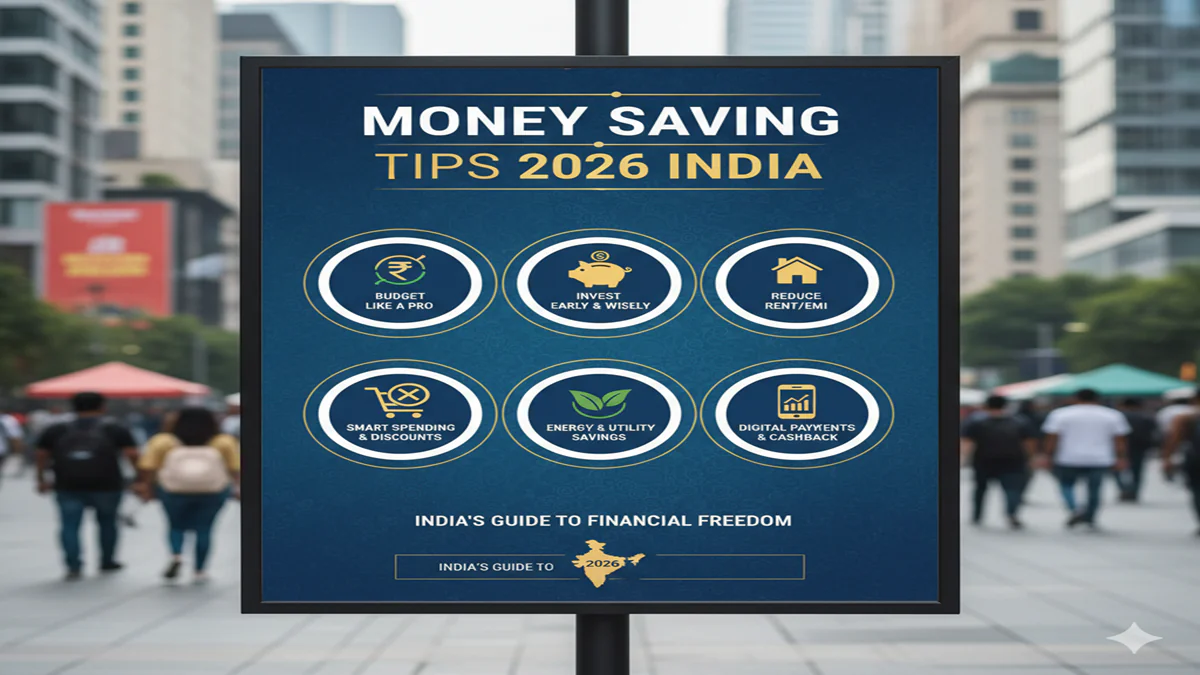
Smart Money Strategies for 2026: Your Ultimate Guide to Saving in India
Introduction: Navigating the 2026 Financial Landscape
Money Saving Tips 2026 India As we step into 2026, Indians face a unique financial landscape shaped by rapid digital transformation, evolving economic policies, and changing consumption patterns. With inflation concerns persisting and new investment vehicles emerging, mastering money-saving techniques has never been more crucial. This comprehensive guide explores actionable strategies tailored to India’s 2026 economic context, helping you build savings, reduce expenses, and secure your financial future.
Whether you’re a young professional starting your career, a family managing household expenses, or someone approaching retirement, these forward-thinking approaches will help you navigate the financial challenges and opportunities that 2026 presents.
1. Digital-First Financial Management
Leverage AI-Powered Budgeting Tools
2026 will see artificial intelligence becoming more integrated into personal finance. Apps likeSmartCoin, Walnut, and ETMoneyare evolving to provide predictive budgeting, using your spending patterns to forecast future expenses and suggest optimal saving opportunities. These tools can now connect across your financial accounts (with proper security measures) to give a holistic view of your finances.
Actionable tip: Dedicate 30 minutes weekly to review AI-generated spending insights. Look for recurring subscriptions you’ve forgotten about and patterns of “impulse spending” the algorithm identifies.
Embrace Unified Payments Interface (UPI) 2.0 Features
The UPI ecosystem continues to expand, with 2026 bringing enhanced features like scheduled payments, investment through UPI, and bundled transaction analytics. Use UPI’s detailed categorization to automatically track where your money goes each month.
Pro strategy: Create separate UPI IDs for different spending categories (essentials, entertainment, education) to automatically segregate expenses without manual effort.
Digital Gold and Micro-Investment Platforms
Platforms like Paytm Gold, Google Pay’s Gold feature, and digital sovereign gold bonds allow you to invest small amounts regularly. With inflation protection traditionally offered by gold, these digital options eliminate making charges and storage concerns.
2. Smart Tax Planning for 2026
Updated Section 80C Optimizations
While the basic 80C limit remains ₹1.5 lakh, 2026 bringsnew eligible instruments and revised limits for existing ones. Consider:
- Increased NPS contributions(additional ₹50,000 under 80CCD[1B])
- Health insurance premiumsunder 80D, with new sub-limits for senior citizens and critical illness coverage
- Education loan interestunder 80E, now expanded to include skill development courses
Capital Gains Management
With market volatility expected in 2026, tax-loss harvesting becomes crucial. Sell underperforming investments to book losses that offset capital gains. New platforms automate this process, identifying optimal times for such transactions.
House Rent Allowance (HRA) Optimization
If you’re a renter, ensure your HRA exemption is fully claimed. With remote work continuing for many, 2026 guidelines allow partial claims even if you work from hometowns rather than office locations. Maintain proper rent receipts and ensure your landlord’s PAN is included for amounts over ₹1 lakh annually.
3. Revolutionizing Daily Expenses
Smart Grocery Management
AI-powered price trackingapps now predict price drops for staples. Combine these withcashback credit cards(offering up to 10% on supermarkets) andloyalty programs.
Weekly practice: Plan meals around seasonal produce and discount offers. January-March offers winter vegetable bargains, while monsoon months provide cheaper tropical fruits.
Transportation Cost Reduction
With electric vehicle (EV) infrastructure expanding, 2026 presents opportunities for significant long-term savings:
- Government subsidieson EV purchases continue, with additional state-level incentives
- Reduced operating costs(₹1-1.5/km for EVs versus ₹6-8/km for petrol vehicles)
- Corporate EV partnershipsoffering discounted charging at workplaces
For daily commuters, metro smart cards with automatic top-up and journey optimization can save 15-20% compared to single tickets.
Utility Bill Optimization
- Electricity:Time-of-day pricing allows running heavy appliances during off-peak hours (typically 11 PM-6 AM) at 30-50% lower rates
- Mobile plans:With 5G rollout completing, look for bundled offerings combining broadband, mobile, and OTT subscriptions at 20-30% discounts
- Water:Rainwater harvesting systems now qualify forproperty tax rebatesin most major cities
4. Strategic Housing and Living Costs
The Hybrid Living Model
2026 sees professionals adopting “hub and spoke” living—smaller homes in business districts combined with family homes in suburbs or tier-2 cities. This model can reduce housing costs by 30-40% while maintaining work access.
Co-Living and Co-Housing Options
For singles and young couples, professionally managed co-living spaces offer all-inclusive rents covering utilities, maintenance, and often basic meals. Premium versions include cleaning and laundry services, reducing the need for domestic help.
Energy Efficiency Upgrades
Government initiatives like the ECO Niwas Samhita provide subsidies for energy-efficient home modifications:
- Solar water heaters(up to 40% subsidy)
- LED lighting conversions(completed in most urban areas but expanding to rural)
5. Future-Proof Investment Approaches
Systematic Investment Plan (SIP) 2.0
Beyond traditional mutual fund SIPs, 2026 introduces:
- Goal-based SIPsthat automatically adjust risk profile as target dates approach
- Flexible SIPsallowing you to invest more when markets dip (using algorithms to identify opportunities)
- SIPs in international fundsproviding global diversification
These allow small investors to participate in commercial real estate and infrastructure projects with much lower capital (often ₹10,000-15,000 initial investment). With yields typically between 7-9%, they offer regular income with professional management.
Digital Sovereign Assets
Digital rupee and blockchain-based government bonds provide new savings vehicles with potentially higher liquidity and transparency than traditional instruments.
6. Healthcare Cost Management
Preventive Health Subscriptions
Many insurers now offer premium discounts for healthy behaviors tracked via wearables. Regular exercise, sleep patterns, and annual check-ups can reduce premiums by 10-15%.
Generic Medicine Platforms
Apps like 1mg and PharmEasy now offer subscription models for chronic medications with 20-30% savings. Some integrate with insurance for direct claim processing.
Telemedicine Optimization
Post-pandemic, telemedicine consultations (typically ₹200-500) save both consultation fees and travel costs/time. Many corporate health plans now include unlimited teleconsultations.
7. Education and Skill Development Savings
Corporate-Learning Partnerships
Many companies now offer “learning wallets” (₹50,000-1,00,000 annually) for courses on platforms like Coursera, Udemy, and UpGrad. These are tax-free benefits under most circumstances.
Skill-Based Scholarship Expansion
Government initiatives like Skill India offer subsidized or free certification in high-demand fields (data analytics, digital marketing, AI basics). Private companies also offer income share agreements where you pay only after securing employment.
Digital Library Memberships
Platforms like Scribd, Audible, and local digital library initiatives provide access to thousands of books at fraction of purchase costs. Many Indian libraries now offer digital memberships for ₹500-1000 annually.
8. Sustainable Savings: Good for Planet and Pocket
Circular Economy Participation
Rental and resale platforms for electronics, furniture, and clothing can save 40-70% compared to new purchases. With quality verification improving, this represents both economic and environmental savings.
Water and Energy Conservation Rebates
Municipal corporations offer direct bill rebates for documented reductions in water and electricity usage year-over-year. Simple changes like aerators on taps and smart power strips can yield 5-10% savings with minimal investment.
Sustainable Transportation Incentives
Beyond EVs, cycle-to-work programs offer tax benefits, health savings, and zero fuel costs. Many employers now provide secure parking, showers, and maintenance support.
Conclusion: Building Your 2026 Savings Plan
The financial landscape of 2026 India rewards those who are informed, adaptable, and proactive. Begin by implementing just 2-3 strategies from this guide that best fit your situation. Track your progress quarterly, adjusting as needed. Remember that consistent small actions—automating savings, optimizing taxes, reducing waste—compound into significant financial security over time.
With digital tools making financial management more accessible than ever, 2026 presents unprecedented opportunities to build wealth while enjoying life. Start today, and transform your financial future one smart decision at a time.
Frequently Asked Questions (FAQs)
1. How much should I aim to save from my income in 2026?
While the traditional “50-30-20” rule (50% needs, 30% wants, 20% savings) remains relevant, 2026’s economic conditions suggest aiming for 25-30% savings rate if possible. Start with whatever percentage you can manage—even 10% consistently saved and invested can build significant wealth over time due to compounding. Use salary increases to boost your savings rate rather than lifestyle inflation.
2. Are digital savings and investment platforms safe to use in India?
Regulated platforms registered with SEBI, RBI, or IRDAI are generally safe. Key safety measures for 2026 include:
- Ensure platforms usetwo-factor authentication
- Check forSSL encryption(https://)
- Verify the platform’sgrievance redressal mechanism
- Never share OTPs, UPI PINs, or passwords
- Start with small amounts before committing larger sums
- Regularly update apps and use official app stores only
3. How can I save money if I’m already on a tight budget?
Focus on high-impact, low-effort strategies:
- Utility audit:Use government portals to check if you’re eligible for any subsidy schemes
- Consolidate debts:Consider a lower-interest personal loan to pay off multiple high-interest debts
- Community resources:Share subscriptions, join community kitchens, or participate in skill-bartering networks
- Government schemes:Regularly check the National Portal of India for new welfare schemes you may qualify for
4. What’s the single most impactful change I can make for 2026 savings?
Automate your savings completely. Set up automatic transfers that move money to savings/investments immediately when you receive income. This “pay yourself first” approach ensures savings happen before discretionary spending. In 2026, use intelligent automation that adjusts amounts based on your income fluctuations and financial goals.
5. How should I balance saving money with investing for growth?
Maintain a three-tier approach:
- Emergency fund:6-9 months of expenses in liquid instruments (savings account, liquid funds)
- Short-term goals:(1-3 years) in low-risk instruments (FDs, debt funds, arbitrage funds)
- Long-term wealth:(5+ years) primarily in equity (index funds, diversified equity funds)