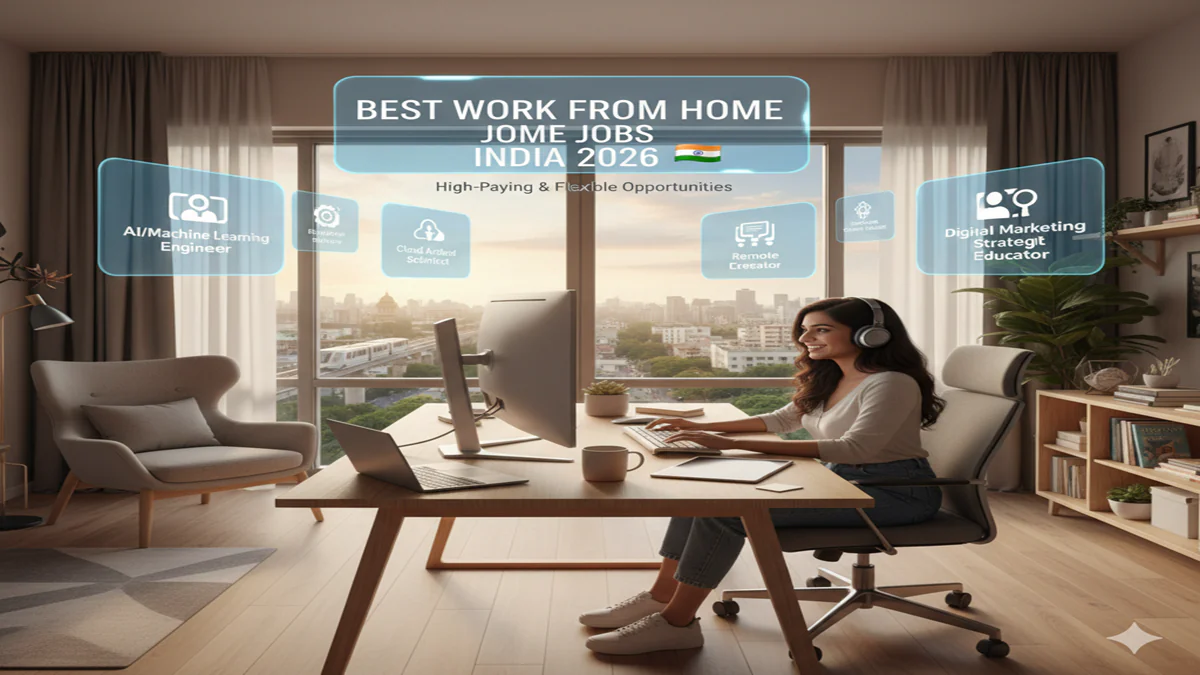
The Future of Flexibility: A Comprehensive Guide to the Best Work From Home Jobs in India (2026)
Best Work From Home Jobs In India 2026 The landscape of work in India has undergone a seismic shift. What began as a necessity during the pandemic has evolved into a permanent, preferred mode of operation for millions. By 2026, the “work-from-home” (WFH) and “remote work” paradigm is not just an alternative; it’s a mainstream career path, driven by technological ubiquity, changing corporate philosophies, and a deep-seated desire for work-life integration among professionals. India, with its vast pool of talent, world-class digital infrastructure, and a booming gig economy, stands at the forefront of this revolution.
This guide delves into the best work-from-home jobs in India for 2026, categorized by skill set and future growth potential. We’ll explore not just the “what,” but the “how”—detailing the required skills, potential earnings, and platforms to get started.
The 2026 Remote Work Landscape in India: A Snapshot
Before diving into specific roles, understanding the macro-environment is crucial:
- Hyper-Specialization is Key:Generalist roles are increasingly automated. Employers seek niche experts—the cybersecurity specialist for fintech, the conversion-rate optimization copywriter, the sustainability data analyst.
- Asynchronous Work Dominates:With teams spread across time zones, the ability to communicate and deliver effectively without real-time interaction is a prized skill.
- Digital Nomadism Goes Mainstream:Tier-2 and Tier-3 cities are witnessing an influx of remote professionals, boosting local economies and decentralizing opportunity. Companies are adapting with “Remote-First” policies.
- AI as a Co-pilot, Not a Replacement:Proficiency in using AI tools (for coding, content ideation, data crunching, design mock-ups) is no longer a bonus; it’s a baseline expectation for efficiency.
- Formalization of the Gig Economy:Platforms are offering more security, benefits, and long-term contract structures, blurring the line between freelancing and traditional employment.
Category 1: The Tech & Digital Dominance
1. Full-Stack & Niche Development (AI/ML, Blockchain, Cybersecurity)
The demand for builders of the digital world remains insatiable. By 2026, expertise in emerging niches will command premium rates.
- Roles:AI/ML Engineer, Blockchain Developer, DevOps Engineer, Cybersecurity Analyst (Remote), Frontend/Backend Specialists.
- Skills Required:Proficiency in relevant languages (Python, Solidity, Rust, JavaScript frameworks), cloud platforms (AWS, Azure, GCP), understanding of AI models, smart contracts, or security protocols.
- Potential Earnings (Monthly):₹1,00,000 – ₹3,00,000+ for experienced specialists. Entry-level: ₹40,000 – ₹70,000.
- How to Start:Build a robust GitHub portfolio, contribute to open-source projects, earn certifications (from AWS, CompTIA, Coursera Specializations), and leverage platforms likeTuring.com,Arc.dev,Upwork, andAngelList.
2. Data Science & Advanced Analytics
Data is the new oil, and the refiners—those who can extract insights—are kings. The field is moving from descriptive analytics to predictive and prescriptive modeling.
- Roles:Data Scientist, Data Analyst, Business Intelligence (BI) Analyst, Data Engineer.
- Skills Required:Statistics, Python/R, SQL, data visualization (Tableau, Power BI), machine learning libraries, big data tools (Spark, Hadoop).
- Potential Earnings (Monthly):₹90,000 – ₹2,50,000+.
- How to Start:Master SQL and Python, complete end-to-end projects (Kaggle competitions), create a portfolio showcasing storytelling with data, and network on LinkedIn.
3. Cloud Computing & Solutions Architecture
As Indian businesses of all sizes migrate to the cloud, experts who can design, manage, and secure these environments are critical.
- Roles:Cloud Solutions Architect, Cloud Security Engineer, Cloud DevOps Engineer.
- Skills Required:Deep expertise in one major cloud provider, infrastructure-as-code (Terraform, CloudFormation), networking, security, and cost optimization.
- Potential Earnings (Monthly):₹1,20,000 – ₹3,00,000+.
- How to Start:Attain professional-level certifications from AWS, Microsoft Azure, or Google Cloud. Gain hands-on experience through labs and freelance projects.
Category 2: The Creative & Content Economy
4. Content Specialization & Strategy
Beyond generic blogging, content roles have splintered into high-value specializations.
- Roles:SEO Content Strategist, Video Scriptwriter (for YouTube, brands), B2B (Business-to-Business) Content Marketer, UX (User Experience) Writer.
- Skills Required:Exceptional writing tailored to platform and audience, SEO keyword research (with a focus on E-E-A-T: Experience, Expertise, Authoritativeness, Trustworthiness), understanding of funnels and conversion, basic video/audio script formatting.
- Potential Earnings (Monthly):₹50,000 – ₹1,50,000+ (retainers are common).
- How to Start:Build a niche-specific portfolio (e.g., “SaaS product explainer videos,” “eco-friendly brand blog articles”). Start a personal blog/YouTube channel. UseContently,Upwork, and LinkedIn to find clients.
5. Video Production & Editing
Video is the undisputed king of content. Remote editors and producers who can create engaging, platform-optimized video are in high demand.
- Roles:Short-Form Video Editor (Reels, Shorts, TikTok), Podcast Editor & Producer, Explainer Video Animator (using tools like After Effects, Canva).
- Skills Required:Proficiency in Adobe Premiere Pro, Final Cut Pro, DaVinci Resolve; understanding of pacing, storytelling, color grading, and sound design for the specific format.
- Potential Earnings (Monthly):₹40,000 – ₹1,20,000+.
- How to Start:Edit spec videos for popular creators or brands to show skill. Offer pro-bono work initially to build a reel. Market yourself onInstagram,Behance, and freelancing platforms.
6. Performance Marketing & Growth Hacking
Businesses want measurable ROI from their marketing spend. This role is purely data-driven and results-oriented.
- Roles:Performance Marketer, Growth Hacker, Paid Ads Specialist (Meta, Google, LinkedIn, Programmatic).
- Skills Required:Analytics (Google Analytics 4), ad platform expertise, A/B testing, conversion rate optimization (CRO), landing page psychology.
- Potential Earnings (Monthly):₹60,000 – ₹2,00,000+ (often with performance bonuses).
- How to Start:Get certified in Google Ads and Meta Blueprint. Run campaigns for a small business or your own project to show tangible results (e.g., “Increased leads by 30% while reducing cost-per-lead by 15%”).
Category 3: Business & Professional Services
7. Remote Financial Consulting & Analysis
The complexity of global finance and the rise of Indian startups create demand for remote financial expertise.
- Roles:Virtual CFO (Chief Financial Officer), Financial Analyst for Startups, Investment Research Analyst, GST/Tax Consultant.
- Skills Required:CA, CFA, or MBA-Finance credentials are highly valued. Expertise in financial modeling, forecasting, investor reporting, and Indian compliance (GST, TDS) is crucial.
- Potential Earnings (Monthly):₹75,000 – ₹2,50,000+ (retainer-based models).
- How to Start:Network with startups onAngelListandWellfound. Offer fractional CFO services. Build authority by writing on platforms like LinkedIn or Substack
8. Executive & Niche Virtual Assistance
The VA role has evolved from email management to specialized project ownership.
- Roles:Executive VA for Founders, Real Estate VA, E-commerce & Shopify VA, Social Media Management VA.
- Skills Required:Beyond organization, skills like CRM (Customer Relationship Management) management (HubSpot, Salesforce), basic design (Canva), e-commerce platform knowledge, and customer service tools (Zendesk) are needed.
- Potential Earnings (Monthly):₹30,000 – ₹80,000+.
- How to Start:Specialize in a vertical. Use platforms likeBelay Solutions,Time Etc, orUpworkto find high-quality clients.
9. Online Tutoring & Corporate Training
Edtech is mature, but the demand for high-quality, interactive instruction remains.
- Roles:STEM Tutor for International Curricula (IB, IGCSE), Corporate Soft Skills Trainer, Specialized Language Coach (Business English, Mandarin for professionals), Coding Instructor for Kids.
- Skills Required:Deep subject expertise, engaging presentation skills, familiarity with digital whiteboards and interactive tools.
- Potential Earnings (Monthly):₹40,000 – ₹1,00,000+ (depending on niche and clientele).
- How to Start:Create a professional profile on platforms likeCodingal,Camp K12,Outschool, orPreply. For corporate training, network on LinkedIn and offer free workshops.
Category 4: The Emerging Frontier
10. Metaverse & Web3 Roles
While still nascent, 2026 will see solidification of roles in the next iteration of the internet.
- Roles:Smart Contract Auditor, Metaverse Experience Designer, Web3 Community Manager, NFT (Non-Fungible Token) Project Manager.
- Skills Required:Understanding of blockchain fundamentals, Discord/Telegram community management, 3D design basics (for metaverse), and a strong grasp of the specific culture and trends.
- Potential Earnings (Monthly):Highly variable, but can range from ₹60,000 – ₹2,00,000+ for established experts.
- How to Start:Immerse yourself in the space. Join DAOs (Decentralized Autonomous Organizations), contribute to projects, build a public profile as a knowledgeable person on X (formerly Twitter) or specialized forums.
11. Sustainability & ESG Consulting
As regulations and consumer pressure mount, companies need help navigating Environmental, Social, and Governance (ESG) reporting and strategy.
- Roles:ESG Data Analyst, Sustainability Reporting Consultant, Green Supply Chain Analyst.
- Skills Required:Understanding of global frameworks (GRI, SASB), data analysis, knowledge of sector-specific environmental impacts.
- Potential Earnings (Monthly):₹70,000 – ₹1,80,000+.
- How to Start:Gain relevant certifications. Offer to help smaller companies with their initial ESG disclosures. Write and speak about the topic to build credibility.
How to Succeed in the 2026 Remote Job Market: Essential Tips
- Build a Digital HQ:Your online presence is your office. Have a polished LinkedIn, a personal website/portfolio, and a professional presence on relevant platforms (GitHub, Behance, etc.).
- Master Asynchronous Communication:Learn to write clear, concise, and comprehensive updates. Use tools like Loom for video updates. Over-communicate proactively.
- Invest in Continuous Upskilling:Dedicate time weekly to learn. Use platforms likeCoursera,Udacity, andPluralsight. Follow industry newsletters and thought leaders.
- Create Systems, Not Just Goals:Remote work requires discipline. Use project management tools (Notion, Asana), time-block your calendar, and set clear boundaries between work and personal life to prevent burnout.
- Network Intentionally:Join online communities (Slack, Discord) in your niche. Attend virtual conferences. Reach out for informational interviews. Your network will be your primary source of opportunities.
FAQs: Best Work From Home Jobs in India (2026)
1. I have no experience in these fields. How can I realistically start a remote career by 2026?
Focus on transferable skills. Are you organized? Consider specialized VA roles. Good at explaining? Look at tutoring. Then, aggressively upskill. Take online courses, build a portfolio with volunteer or low-cost projects for friends/local businesses, and apply for entry-level or apprenticeship positions on remote job boards. The next two years are your runway to build expertise.
2. What are the biggest challenges of working from home, and how can I overcome them?
- Isolation & Blurred Boundaries:Schedule virtual co-working sessions with peers. Have a dedicated workspace and a strict shutdown ritual.
- Distractions:Use time-management techniques like the Pomodoro Technique. Communicate your “focus hours” to household members.
- Career Growth Visibility:Proactively schedule quarterly check-ins with your manager. Document your achievements publicly in shared team channels. Seek out mentors within your remote company.
3. Are remote salaries in India comparable to in-office salaries now?
For roles at globally competitive companies (especially tech and product), remote salaries are often at par with, and sometimes exceed, in-office salaries in metro cities. For roles tied to the local Indian market, there might be a slight adjustment based on location, but the gap is closing rapidly as companies adopt standardized remote pay bands.
4. Which industries are most resistant to remote work in India, and will this change by 2026?
Manufacturing, healthcare (clinical roles), retail (in-store), and certain lab-based R&D will remain primarily on-site. However, even these industries have embraced remote work for supporting functions like HR, marketing, design, and data analysis. The trend is toward hybrid models where possible.
5. How do I avoid scams when looking for legitimate work-from-home jobs?
- Red Flags:Jobs asking for upfront payment, vague job descriptions, contact via personal email (not company domain), promises of unrealistic earnings for minimal work.
- Best Practices:Research the company thoroughly. Use established platforms (LinkedIn Jobs, Wellfound, remote-specific boards likeRemote OK,We Work Remotely). Insist on a formal video interview process. Trust your instincts—if it seems too good to be true, it likely is.
Conclusion
The future of work in India is flexible, digital, and borderless. By 2026, the best work-from-home jobs will reward deep expertise, digital fluency, and proactive communication. The opportunity is no longer confined to the metropolitan hubs but is accessible to talent in every corner of the country. The key is to identify your niche, commit to lifelong learning, and build a professional identity that transcends physical location. The remote work revolution is here to stay—equip yourself not just to participate, but to thrive.