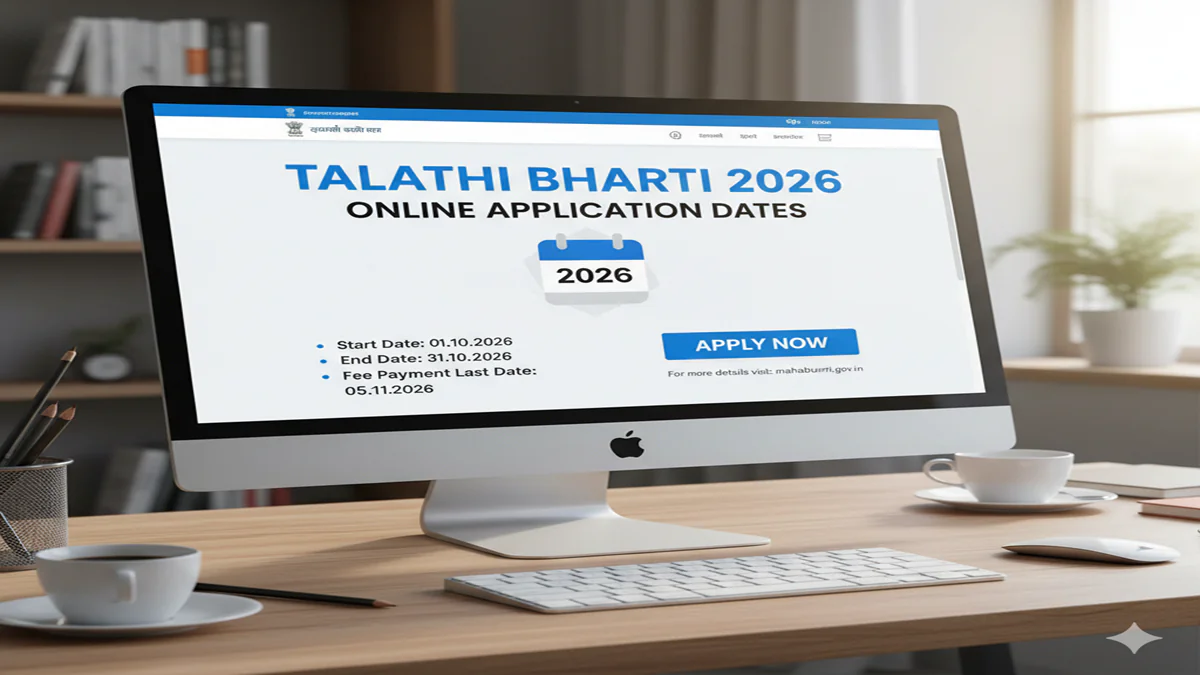
Talathi Bharti 2026 Online Form Date: महाराष्ट्र तलाठी भर्ती 2026 का बिगुल बजा! जानें कब से भरे जाएंगे फॉर्म और क्या है नया एग्जाम पैटर्न।
Talathi Bharti 2026 Online Form Date: Introduction: महाराष्ट्र राजस्व विभाग में ‘तलाठी’ (Talathi) बनने का सपना देख रहे उम्मीदवारों के लिए साल 2026 नई उम्मीदें लेकर आया है। पिछले कुछ समय से रिक्त पदों को भरने की मांग और प्रशासनिक आवश्यकताओं को देखते हुए, महाराष्ट्र सरकार जल्द ही “Talathi Bharti 2026 Online Form Date” की घोषणा करने वाली है।
हालिया रिपोर्ट्स के अनुसार, लगभग 1700 से अधिक नए पदों को मंजूरी मिलने की संभावना है, जिससे कुल रिक्तियों की संख्या में बड़ा इजाफा होगा। इस लेख में हम आपको आगामी भर्ती प्रक्रिया, संभावित तारीखों, पात्रता और आवेदन करने के तरीके के बारे में विस्तार से जानकारी देंगे।
1. Talathi Bharti 2026: महत्वपूर्ण संभावित तिथियां (Expected Dates)
Talathi Bharti 2026 Online Form Date: अधिकारिक नोटिफिकेशन (Notification) आने से पहले, विभागीय सूत्रों और पिछले वर्षों के रुझानों के आधार पर संभावित कार्यक्रम नीचे दिया गया है:
| कार्यक्रम (Event) | संभावित तिथि (Tentative Date) |
| Official Notification Release | मार्च – अप्रैल 2026 |
| Online Form Start Date | अप्रैल 2026 |
| Last Date to Apply | मई 2026 |
| Hall Ticket/Admit Card | परीक्षा से 10 दिन पहले |
| Talathi Exam Date 2026 | जून – जुलाई 2026 |
2. रिक्त पदों का विवरण (Vacancy Details)
Talathi Bharti 2026 Online Form Date: महाराष्ट्र सरकार ने प्रशासन को सुचारू बनाने के लिए राजस्व विभाग में नए तलाठी साझा (Sajha) बनाने का निर्णय लिया है।
- कुल संभावित पद: 4644 (पुराने लंबित पद + 1700 नए स्वीकृत पद)।
- चयन का आधार: कंप्यूटर आधारित टेस्ट (CBT) और दस्तावेज सत्यापन।
3. पात्रता और योग्यता (Eligibility Criteria 2026)
Talathi Bharti 2026 Online Form Date: तलाठी भर्ती के लिए आवेदन करने हेतु उम्मीदवारों को निम्नलिखित मापदंडों को पूरा करना होगा:
- शैक्षणिक योग्यता: उम्मीदवार के पास किसी भी मान्यता प्राप्त विश्वविद्यालय से स्नातक (Graduation) की डिग्री होनी चाहिए। साथ ही, MS-CIT या उसके समकक्ष कंप्यूटर सर्टिफिकेट होना अनिवार्य है (कुछ मामलों में नियुक्ति के बाद समय दिया जाता है)।
- आयु सीमा: * सामान्य वर्ग: 18 से 38 वर्ष।
- आरक्षित वर्ग: 18 से 43 वर्ष।
- भाषा ज्ञान: मराठी और हिंदी भाषा का ज्ञान होना आवश्यक है।
4. ऑनलाइन फॉर्म कैसे भरें? (Step-by-Step Guide)
Talathi Bharti 2026 Online Form Date: जब लिंक एक्टिव हो जाएगा, तब आप mahabhumi.gov.in पर जाकर इन चरणों का पालन कर सकते हैं:
- पंजीकरण (Registration): अपना नाम, मोबाइल नंबर और ईमेल आईडी डालकर रजिस्ट्रेशन करें।
- विवरण भरें: अपनी शैक्षणिक जानकारी और पते का विवरण भरें।
- दस्तावेज अपलोड: अपना फोटो, हस्ताक्षर और जरूरी प्रमाण पत्र स्कैन करके अपलोड करें।
- शुल्क भुगतान: सामान्य वर्ग के लिए लगभग ₹1000 और आरक्षित वर्ग के लिए ₹900 का शुल्क ऑनलाइन जमा करें।
- सबमिट: फॉर्म चेक करें और फाइनल सबमिट करके प्रिंटआउट ले लें।
5. परीक्षा पैटर्न 2026 (Exam Pattern)
Talathi Bharti 2026 Online Form Date: तलाठी की परीक्षा वस्तुनिष्ठ (Objective) प्रकार की होती है, जिसमें कुल 100 प्रश्न और 200 अंक होते हैं:
| विषय (Subject) | प्रश्न | अंक |
| मराठी व्याकरण | 25 | 50 |
| अंग्रेजी व्याकरण | 25 | 50 |
| सामान्य ज्ञान (GK) | 25 | 50 |
| बौद्धिक चाचणी/गणित | 25 | 50 |
4. अक्सर पूछे जाने वाले प्रश्न (FAQs)
Q1: क्या 2026 की तलाठी भर्ती MPSC के माध्यम से होगी?
Ans: शासन स्तर पर चर्चा जारी है कि पारदिर्शता के लिए इसे MPSC को सौंपा जाए, लेकिन फिलहाल राजस्व विभाग ही इसकी नोडल एजेंसी है।
Q2: क्या अंतिम वर्ष के छात्र आवेदन कर सकते हैं?
Ans: आमतौर पर विज्ञापन की अंतिम तिथि तक आपके पास ग्रेजुएशन की डिग्री होनी चाहिए।
Q3: परीक्षा का माध्यम क्या होगा?
Ans: परीक्षा मुख्य रूप से मराठी और अंग्रेजी (मराठी व्याकरण को छोड़कर) माध्यम में होगी।
Conclusion: तैयारी अभी से शुरू करें!
Talathi Bharti 2026 Online Form Date का इंतजार करने के बजाय अपनी पढ़ाई पर ध्यान देना अधिक फायदेमंद होगा। चूंकि प्रतिस्पर्धा बहुत कड़ी है, इसलिए मराठी व्याकरण और सामान्य ज्ञान (महाराष्ट्र विशेष) पर अपनी पकड़ मजबूत करें। आधिकारिक अपडेट के लिए Mahabhumi की वेबसाइट को नियमित रूप से चेक करते रहें।
Talathi Bharti 2026: Complete Guide to Online Form Date, Eligibility, Exam Pattern & Preparation
Navigating the Talathi Bharti 2026: A Comprehensive Guide to Online Application and Strategic Preparation
Talathi Bharti 2026 Online Form Date
Talathi Bharti 2026 Online Form Date: The Talathi (also known as Lekhpal, Patwari, or Village Accountant in different states) is a cornerstone of rural administration in India. This prestigious position, responsible for maintaining land records, collecting revenue, and serving as a vital link between the government and the agrarian community, attracts lakhs of aspirants every year. With the Talathi Bharti 2026 on the horizon, a wave of anticipation is building among candidates across states like Maharashtra, Gujarat, Madhya Pradesh, and Rajasthan. This exhaustive guide aims to be your definitive resource, demystifying the online application process, delving into the exam pattern, and providing a strategic roadmap for success.
Part 1: The Role, Eligibility, and Importance of Talathi
Talathi Bharti 2026 Online Form Date: Before diving into the dates and forms, it’s crucial to understand the significance of the post. A Talathi is not just a government clerk; they are the custodians of the most critical asset in rural India—land. Their duties encompass:
- Land Record Management: Maintaining and updating the *7/12 extract* (Satbara Utara) and *8-A* forms, which are the definitive records of rights, tenancy, and cultivation.
- Revenue Collection: Assisting in the collection of land revenue, irrigation charges, and other government dues.
- Census and Election Duties: Playing a key role in demographic surveys and the conduct of free and fair elections.
- Government Scheme Implementation: Acting as a ground-level officer for disseminating and verifying benefits of various agricultural and social welfare schemes.
- Dispute Resolution: Providing official land records that serve as primary evidence in resolving boundary and ownership disputes.
Eligibility Criteria (General Overview):
Talathi Bharti 2026 Online Form Date: While specific requirements vary by state, the common benchmarks for Talathi Bharti 2026 are expected to be:
- Educational Qualification: A Bachelor’s degree from a recognized university in any discipline. Some states may have specific preferences for candidates with degrees in Agriculture, Commerce, or Science.
- Age Limit: Typically between 18 to 38 years (as of a specified date). Age relaxations are provided for candidates from reserved categories (SC/ST/OBC/EWS), ex-servicemen, and persons with disabilities as per state government norms.
- Domicile Requirement: Most states require the candidate to be a domicile of that state, possessing a valid resident certificate.
- Computer Proficiency: With the digitization of land records (e.g., the Digital India Land Records Modernisation Programme), basic knowledge of computers and typing skills (Marathi/Gujarati/Hindi and English) is increasingly essential.
Part 2: Talathi Bharti 2026 Online Form Date: The Central Question
Talathi Bharti 2026 Online Form Date: This is the most sought-after piece of information. It is critical to understand that there isno single all-India Talathi exam date. Recruitment is conducted separately by each state’s revenue department or designated commission (e.g., Maharashtra Group C Service Commission, Gujarat Subordinate Service Selection Board).
Anticipated Timeline for Talathi Bharti 2026:
Talathi Bharti 2026 Online Form Date: Based on previous recruitment cycles, we can project a tentative timeline:
- Official Notification Release: December 2025 – February 2026. States will issue detailed advertisements in leading newspapers and on their official recruitment portals.
- Online Application Window: January 2026 – March 2026. This is the most critical period. The online form will be active for approximately 4-6 weeks.
- Application Correction Window: Usually open for a brief period (3-7 days) after the form closure.
- Admit Card Release: 4-6 weeks before the exam date.
- Written Examination (Tentative): April 2026 – July 2026. States may conduct Prelims and Mains or a single written test.
- Skill Test (Typing/Computer): After the written exam results are declared.
- Document Verification & Final Merit List: Late 2026 – Early 2027.
Where to Find the Official Notification & Form:
Talathi Bharti 2026 Online Form Date: Candidatesmustrely only on official sources to avoid misinformation:
- Maharashtra:
mahassc.gov.in(Maharashtra Group C Service Commission) - Gujarat:
gsssb.gujarat.gov.in(Gujarat Subordinate Service Selection Board) - Madhya Pradesh:
mponline.gov.inorpeb.mp.gov.in - Rajasthan:
rsetb.rajasthan.gov.in(Rajasthan Eligibility Examination for Teachers Board often conducts it) orsso.rajasthan.gov.in - General Advice: Search for “[State Name] Revenue Department Recruitment Portal“.
Part 3: A Step-by-Step Walkthrough of the Online Application Process
Talathi Bharti 2026 Online Form Date: The application process is entirely online. Here’s how to navigate it seamlessly:
- Registration: Visit the official website and click on the link for “Talathi Bharti 2026” or similar. You will need to register using a valid email ID and mobile number. An OTP-based verification will be done.
- Filling the Application Form: Log in with your credentials and carefully fill in all details:
- Personal Details: Name, Date of Birth, Gender, Category (SC/ST/OBC/EWS/Open).
- Educational Details: Marks, percentage, university name, year of passing. Keep your certificates and mark sheets handy.
- Domicile & Address Details: Upload scanned copies of your residence certificate.
- Photograph & Signature: Upload recent, color passport-size photo and signature in the prescribed format (JPG/PNG, specific dimensions and file size).
- Fee varies by category (e.g., General/OBC may pay ₹500-1000, while SC/ST may have a concession or no fee).
- Final Submission and Printout: Review the form thoroughly. Once submitted, you cannot usually make changes (except during the correction window). Download and print the final application form and fee receipt for future reference.
Common Pitfalls to Avoid:
- Incorrect photo/signature format.
- Entering wrong educational percentage or year.
- Selecting the wrong category or domicile certificate.
- Waiting for the last day to apply, risking technical glitches.
Part 4: Exam Pattern and Syllabus: The Blueprint for Success
Talathi Bharti 2026 Online Form Date: The Talathi exam pattern generally follows a two-tier system in many states:
Stage 1: Written Examination (Objective Type – MCQs)
- General Knowledge & Current Affairs: History, Geography, Polity, Economics of the state and India, Current Events (last 1 year), General Science.
- Mathematics & Mental Ability: Arithmetic (Number System, Profit-Loss, Time-Work, Mensuration), Logical Reasoning, Data Interpretation.
Stage 2: Skill Test
- Typing Test: A qualifying test on computer, usually requiring a speed of 30-40 words per minute in the state’s official language and/or English.
Part 5: Strategic Preparation Roadmap for 2026
Talathi Bharti 2026 Online Form Date: With the exam likely in mid-2026, a structured plan is key.
- Phase 1: Foundation (Now – June 2025)
- Gather all official syllabi and previous years’ papers (last 5-10 years) of your state.
- Start with basic textbooks for language, mathematics (up to 10th standard), and state-specific GK.
- Begin daily reading of a state-level newspaper and a monthly current affairs magazine.
- Phase 2: Intensive Study (July 2025 – December 2025)
- Subject-wise deep dive. Use standard competitive exam books.
- Practice 50-100 MCQs daily.
- Start computer typing practice; aim for accuracy first, then speed.
- Make concise notes, especially for current affairs and state-specific topics.
- Take full-length mock tests every weekend under timed conditions.
- Analyze each mock test—identify weak areas and work on them.
- Revise notes and formulas regularly.
- Focus on time management and question selection strategy.
Conclusion
Talathi Bharti 2026 Online Form Date: The Talathi Bharti 2026 is not just an exam; it is a gateway to a respected, stable, and service-oriented career at the grassroots of India’s governance. The journey begins with vigilant tracking of theofficial online form date in early 2026, followed by a meticulous application and an unwavering commitment to preparation. By understanding the role, mastering the process, and following a disciplined study regime, you can significantly enhance your chances of success. Remember, in the digital age, your first step towards becoming a Talathi is a successful online application. Start your preparation today, and stay connected to the official channels for that crucial notification. Good luck!
Frequently Asked Questions (FAQs) for Talathi Bharti 2026
1. Q: What is the exact starting date for the Talathi Bharti 2026 online application form?
A:Talathi Bharti 2026 Online Form Date: There is no single all-India date. Each state will announce its own date. Based on previous cycles, states like Maharashtra and Gujarat are expected to release the notification and open the online application portal betweenDecember 2025 and February 2026. Candidates must regularly check their respective state’s official recruitment websites from October 2025 onwards.
2. Q: I am a graduate with aB.Comdegree. Am I eligible for the Talathi post?
A:Talathi Bharti 2026 Online Form Date: Yes, in most states, a Bachelor’s degree inany discipline(likeB.Com, B.A.,B.Sc., BBA, etc.) from a recognized university is the primary educational qualification for the Talathi exam. Some states may give preference to specific streams, but a general graduate degree is typically sufficient. Always verify the specific notification for your state.
3. Q: Is the Talathi exam conducted in online (CBT) mode or offline (OMR)?
A:Talathi Bharti 2026 Online Form Date: There has been a strong shift towardsComputer-Based Tests (CBT or online mode)for the written examination. However, some states may still use the traditional Offline (OMR sheet) format. The 2026 recruitment will specify the mode in the official advertisement. The subsequent skill test (typing) is always conducted on a computer.
4. Q: What is the application fee for the General category, and how can I pay it?
A:Talathi Bharti 2026 Online Form Date: The application fee varies by state. For the General/Open category, it typically ranges from₹500 to ₹1000. Reserved category candidates (SC/ST/OBC/EWS) often have a concessional fee or are exempted. Payment is made exclusively online through the application portal using Net Banking, Credit Card, Debit Card, or UPI.
5. Q: Besides the written exam, are there any other tests I need to clear?
A:Talathi Bharti 2026 Online Form Date: Yes, most Talathi recruitments include aSkill Test, which is usually aComputer Typing Speed Test. It is generally a qualifying test (marks not added to the final total). The required speed is often around30-40 Words Per Minute (WPM)in the state’s official language (Marathi, Gujarati, etc.) and/or English. You must practice typing on a computer to clear this stage after passing the written exam.
Frequently Asked Questions (FAQs) – Talathi Bharti 2026
1. Q: What is the exact Talathi Online Form Date for 2026?
A:The exact start date for online applications will be announced in the official notification, expected inDecember 2025 – January 2026. The form is likely to be active for 4-6 weeks inJanuary-February 2026. Candidates must checkmahabhumi.gov.inregularly for updates.
2. Q: I am in the final year of my graduation. Can I apply for Talathi Bharti 2026?
A:Yes, candidates appearing for their final year graduation exams are usually allowed to apply provisionally. However, you must possess the final degree certificate by the date specified in the official notification (often at the time of document verification).
3. Q: Is the Talathi Exam conducted in offline (OMR) or online mode?
A:The examination has transitioned toOnline Computer-Based Test (CBT)mode. Candidates will have to answer multiple-choice questions on a computer at designated exam centers.
4. Q: What is the importance of the Computer Knowledge certificate?
A:It is amandatory eligibility criterion. You must possess a government-recognized basic computer certificate (e.g., MS-CIT, CCC, ‘O’ Level) or a degree/diploma in computer science. Your application may be rejected if you fail to provide proof during document verification.
5. Q: How should I prepare for the Revenue Administration section?
A:Focus on theMaharashtra Land Revenue Code, circulars related to the Revenue Department, and the specific duties of a Talathi (like preparing 7/12 extracts). Study materials from MPSC prelims for revenue topics and resources available on the Maharashtra Revenue Department’s website can be extremely helpful. This section is unique and can be a high scorer if prepared well.